
SEO for Plumbers: How to Become the First Call in Your Area
90,500 UK searches a month for 'plumbers near me'. Here is how a plumbing firm ranks for the ones on its patch: keywords, GBP, service pages, timelines.

90,500 people in the UK search “plumbers near me” every month. In January and March 2026 it was 110,000 (Google Ads data, August 2026).
Nobody plans to need a plumber. The boiler dies, the toilet blocks, water starts coming through the light fitting, and someone types a panicked search into their phone. SEO for plumbers is the work of making sure your firm is what they find.
I build websites for plumbing companies and audit their rankings week in, week out. The pattern is always the same: the busiest plumber in any town is the most visible one, and visibility is a fixable problem.
This is the second guide in my trade-by-trade SEO series, and like the roofers guide it sticks to real search data, real costs and honest timelines.
What is SEO for plumbers?
SEO for plumbers means setting up your Google Business Profile and website so your firm appears when people nearby search for plumbing and heating work. It covers the map results that win emergency calls, the service pages that win planned jobs like boiler installs, and the reviews that convince both.
One thing makes plumbing different from most trades. Your demand splits cleanly into panic and planning, and each needs a different half of SEO. Get that split right and the rest of this guide is just execution.
The maths against paid leads
Most plumbers already pay for visibility somewhere. Subscription directories like Checkatrade run £1,200–£2,000+ a year on 12-month commitments. Pay-per-lead platforms charge £5–£40 a lead, tradespeople report roughly one job per 5–10 leads, and the same lead is usually sold to two or three of your competitors.
I keep current figures for every major platform in the trade lead cost tracker, updated quarterly, and my guide to plumbing leads in the UK works out what a won job actually costs on each of the big platforms.
Now look at what advertisers pay Google for one click. Up to £39.66 for “emergency plumber”. Up to £48.83 for “leak detection” (Google Ads data, August 2026).
That is the going rate for a single visit from one high-intent customer. When your plumbing website ranks organically for those searches, you collect the same clicks without the meter running.
The keywords homeowners actually type
Here is the UK plumbing demand, measured, from Google Ads data pulled in August 2026:
| Search | UK searches a month | What it tells you |
|---|---|---|
| plumbers near me | 90,500 | Map pack territory. Your Google Business Profile wins or loses this |
| boiler service | 18,100 | Planned, recurring, and it surges every October |
| emergency plumber | 12,100 | Advertisers bid up to £39 a click. The panic search |
| emergency plumber near me | 9,900 | Same customer, same urgency, same map pack |
| bathroom fitters near me | 8,100 | High job value. Worth its own page and gallery |
| boiler repair near me | 6,600 | Urgent. Doubled to 14,800 in October 2025 |
| blocked drain | 5,400 | Bids to £26 a click. A page of its own |
| boiler installation | 4,400 | £2,000+ jobs from people comparing quotes |
| leak detection | 2,900 | The dearest click in the trade at up to £48 |
| radiator not working | 1,000 | DIY research. A fix-it guide here earns trust and links |
That is the short list. The full one, with twenty terms, what advertisers pay a click for each and how far every one swings in January, is in my plumbing keywords list.
The pattern worth staring at is October. “Boiler service” went from 14,800 searches in August 2025 to 27,100 in October. “Emergency plumber” nearly tripled the same month. The heating goes on, the problems surface, and search demand jumps within weeks.
Roofing has the same seasonality in reverse, peaking with the March storms (I covered that in the SEO for roofers guide). The lesson for both trades is identical: the surge rewards whoever ranked before it started.
Electricians are the exception. Their demand barely moves all year, for reasons I went through in SEO for electricians.
Emergency work: won in the map pack
When water is coming through the ceiling, nobody browses page two. They call one of the three businesses Google puts on the map, and for “plumbers near me” and every emergency search, that map pack takes most of the calls.
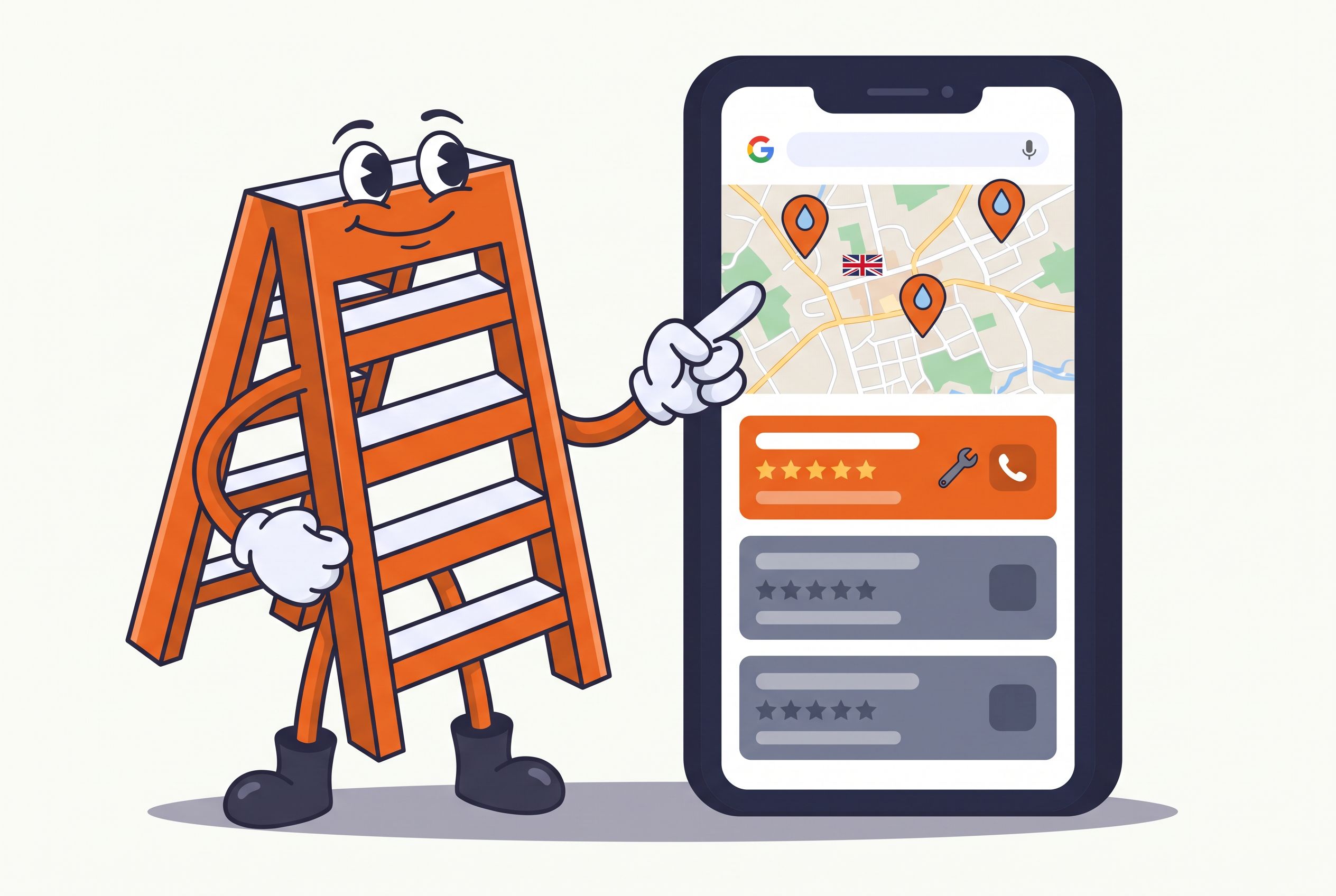
Getting into it is mostly a completeness contest, and most plumbers’ profiles are half done. Yours needs:
- “Plumber” as the primary category, with secondary categories for heating and bathroom work if you do them. Gas engineers should add “Heating contractor”.
- Accurate opening hours, including your real emergency availability. A profile marked closed at 9pm loses the burst-pipe call to one marked open. Never claim 24/7 if you don’t answer at 3am; the reviews will say so.
- Every service listed individually, from tap repairs to full bathroom installs.
- Photos from real jobs, added monthly. Vans, boilers in, bathrooms finished.
- Your Gas Safe registration number in the description if you’re registered. It’s the first legitimacy check UK homeowners know to make.
If Google refuses to verify the profile or suspends it after an edit, the fix is in my Google Business Profile verification guide.
Planned work: won by service pages
Boiler installations, bathroom refits, power flushing. These customers are not panicking; they’re researching, comparing two or three firms, and reading pages properly. A single “Services” list can’t compete for them.
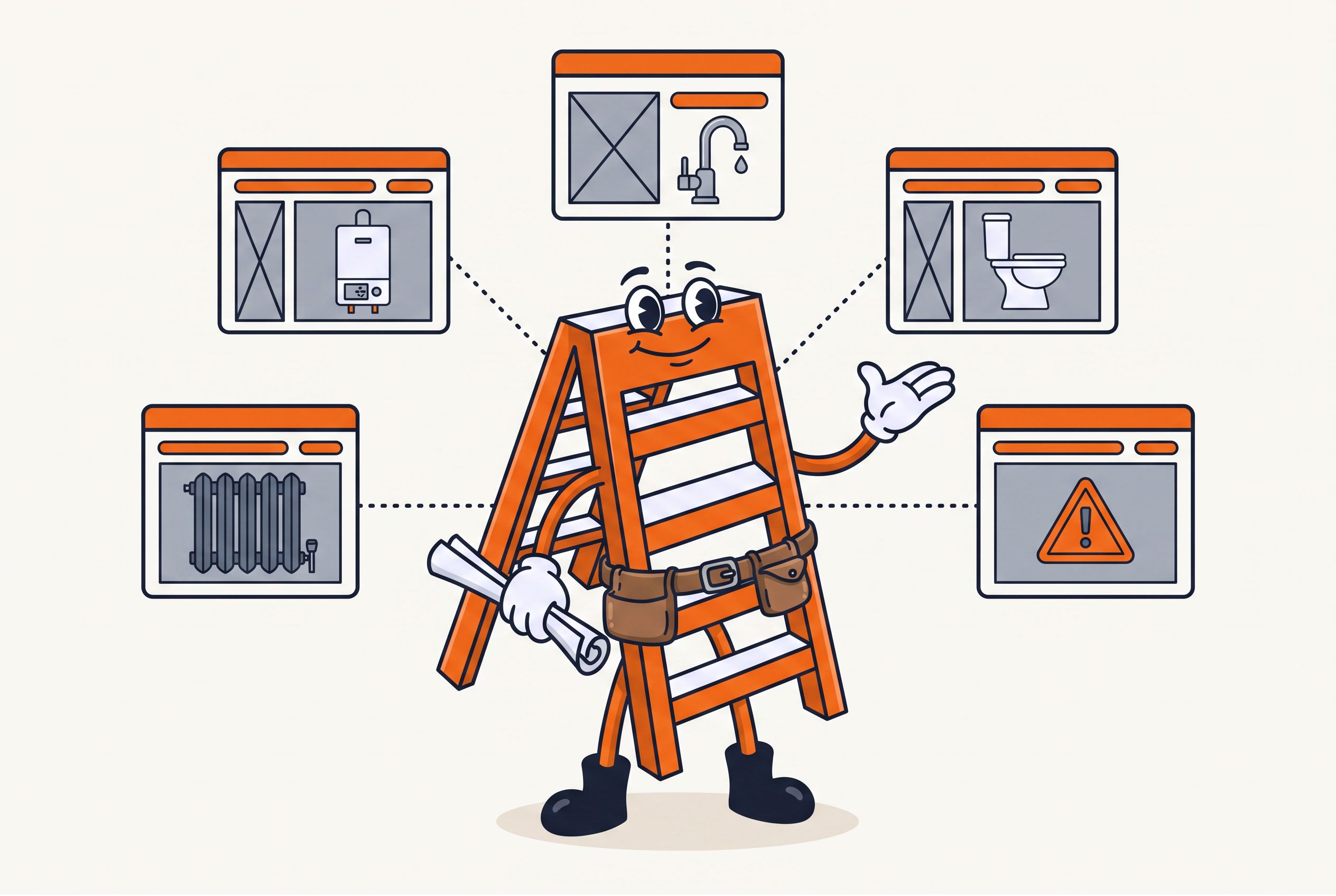
Give each service its own page, and start with the money ones:
- Boiler installation (with real from-prices; “boiler installation” searchers are quote-hunting)
- Boiler repairs and servicing, as a separate page from installation
- Bathroom fitting, carried by photos of your own finished work
- Blocked drains
- Emergency plumbing, written for someone skim-reading in a hurry
- Leak detection, the most valuable click in the trade
Each page needs the service and your town in the main heading, a plain explanation of what happens and what it roughly costs, and your phone number visible throughout. If you cover several towns, the same logic extends to location pages, which I’ve broken down here.
And that “radiator not working” search? Write the honest fix-it guide (bleed it, check the valve, then call someone). The homeowner who fixes it themselves in November remembers who told them how when the boiler dies in December.
Reviews carry both halves
The emergency customer picks from the map pack in under a minute, and review count is the fastest signal they have. The boiler-quote customer reads reviews line by line before shortlisting. Either way, reviews decide whether your visibility converts.
Make it a same-day habit. Text the review link before you’ve left the street, because the response rate drops fast once the fixed tap becomes normal life again. Reply to every review with a detail from the job, and reply to the bad ones calmly with your side and the fix you offered. Future customers judge you on the reply more than the complaint.
Your website has to close what Google opens
Roughly 60% of these searches happen on a phone, and the emergency ones almost all do. A slow site, a buried phone number or a broken mobile layout hands the call to the next result.
The bar to clear: loads in under three seconds, click-to-call number visible without scrolling, Gas Safe and insurance shown up front, reviews pulled onto the page. I walked through a real plumber’s site failing these checks in this plumber website SEO teardown, and if the site is too old to fix, here’s what a plumber website should cost so nobody overcharges you for the rebuild.
Links and citations that count
Skip the £99 bundle of 500 directory submissions. For a local plumbing firm, authority comes from a short list:
- Consistent name, address and phone number on Google, Checkatrade, Yell, Trustpilot and your local directories. Conflicting details erode Google’s confidence in all of them.
- Your Gas Safe Register listing, plus WaterSafe or CIPHE membership pages linking to your site. One regulator link outweighs dozens of junk directories.
- Genuinely local mentions. The bathroom showroom you fit for, a supplier’s project page, the school summer fair you sponsored. One real local link a quarter is a good pace.
How long does plumber SEO take?
Same honest answer I gave the roofers. Map pack improvements tend to show in 2–3 months because the competition’s profiles are usually neglected. Service pages take 3–6 months in most towns; competitive city terms take 6–12 and need those links.
For plumbers the deadline is October. Boiler searches jump by thousands the week the heating goes on, and rankings built by late summer catch all of it. Anyone promising page one in 30 days is selling you a keyword nobody searches.
Do it yourself, or pay someone
The free half of this list is genuinely doable from the van: complete the profile, list the services, text the review links, keep your directory details matching. Plenty of plumbers get into the map pack on that alone.
The half that stalls is the website: eight service pages that rank, a site that loads fast, area pages structured properly. That is evening desk work, and after a day on the tools it rarely happens.
Closing that gap is what Local Ladder does. A website built for plumbers with the service pages, review capture and local SEO done as standard, no contract, no agency retainer.
Start where I’d start this week either way. Search “plumber” plus your town in an incognito window and see who takes the three map spots. Open your own Google profile next to theirs and count what they’ve filled in that you haven’t. If you want a second opinion on what to fix first, send me your site and I’ll take a look.
Frequently Asked Questions
How much does SEO cost for a plumbing company in the UK?
The foundations are free: a completed Google Business Profile, a review-request habit and tidied-up directory listings cost time, not money. Paying someone in the UK typically runs £300–£1,500 a month depending on your area and how many services you want to rank for. Compare that against what you already spend: subscription directories alone charge £1,200–£2,000+ a year for leads you share with competitors.
How long does SEO take to work for plumbers?
Map pack movement usually shows in 2–3 months, because most plumbers' Google profiles are incomplete and straightforward to overtake. Service pages for planned work (boiler installation, bathrooms) take 3–6 months in most towns, longer in big cities. The date that matters is October: when the heating goes on, boiler searches jump by thousands. Start in spring or summer and you're ranked for the surge.
Can I do SEO for my plumbing business myself?
A good chunk of it, yes. Completing your Google Business Profile, listing every service on it, texting customers a review link after each job and keeping your details consistent across directories all need no technical skill. The parts plumbers rarely get to are writing a ranking page for each service and fixing a slow or dated website. Do the free parts first; they move rankings on their own.
What are the best keywords for a plumbing website?
The highest-value UK searches are 'plumbers near me' (90,500 a month), 'boiler service' (18,100), 'emergency plumber' (12,100), 'bathroom fitters near me' (8,100), 'boiler repair near me' (6,600) and 'blocked drain' (5,400). The 'near me' and emergency searches are won by your Google Business Profile. The rest need a dedicated page per service with your area named on it.
Do boiler repairs and boiler installation need separate pages?
Yes. They are different searches from different customers: 'boiler repair near me' is someone with a broken boiler today, while 'boiler installation' is someone comparing quotes for a planned job costing £2,000 or more. One combined boiler page ranks properly for neither. Separate pages let you match the urgency, the pricing information and the call to action to each customer.
Is SEO better than Checkatrade for plumbers?
They solve different problems. Checkatrade and similar directories deliver enquiries from day one, which is why plumbers tolerate sharing each lead with two or three rivals and paying £1,200–£2,000+ a year for it. SEO takes months to build but the enquiries are exclusive, free per click and keep coming after you stop paying. Most plumbers I work with run directories while their rankings build, then cut back.
See Where You Rank Before You Spend Anything
A free grid of where you rank across your area, who's above you, and the three changes I'd make first. Sent the same working day.
Show Me Where I Rank